Promoting the construction of campus wetlands suitable for aesthetic, ecological, educational, and research purposes.
Help UNCG demonstrate our commitment to environmental preservation and sustainability
The Beginning of the UNCG Wetlands
In October 2014, the RISE Network hosted John Byrd, a science education professional, who presented a 2-day workshop on incorporating inquiry based learning into STEM curricula. Among other topics he introduced the idea of creating wetlands on campus for this purpose. The Wetlands Committee arose in 2015 as an ad hoc committee under the aegis of the RISE Network to promote and expand this concept for UNCG. In 2016 the Committee secured funding from the Provost to construct two campus wetlands in 2017.
The Wetlands Committee grew, adding new members from various university departments and partnership organizations including the City of Greensboro, Greensboro Science Center and the Audubon Society. In March, 2017 with the help of Duke Energy Water Resources and UNCG Green Fund grants we brought an internationally renowned wetlands restoration/construction expert to UNCG, conduct workshops, and restore two wetlands in Peabody Park on our main campus. Construction involved more than 100 UNCG students, faculty, staff and community members. The ongoing care of the wetlands are being integrated into courses and research in the science disciplines.
Installation

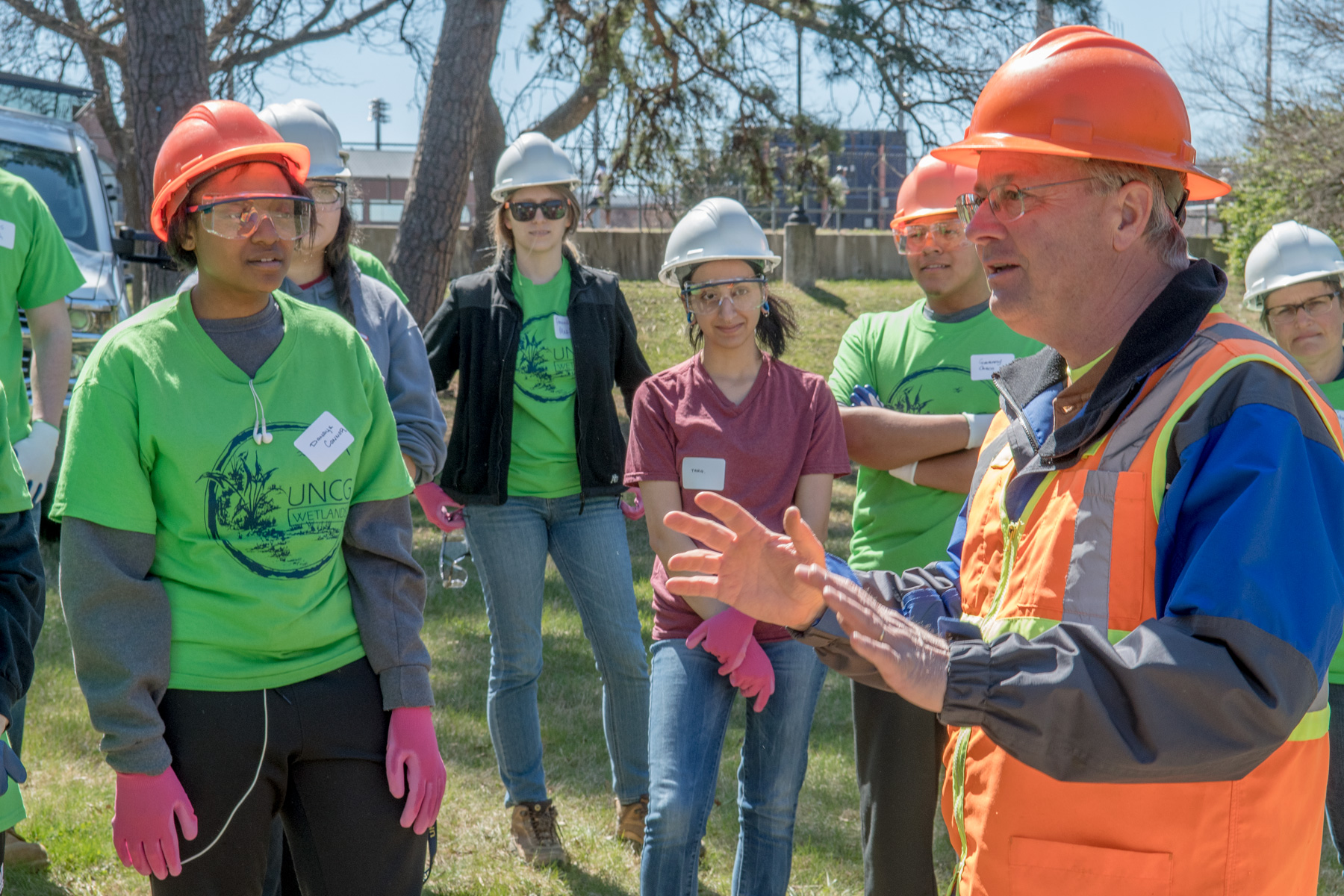
Wildlife biologist, Tom Biebighauser trains volunteers in the process of restoring wetlands as the recreation site wetland is being installed.

The construction of the wetlands on the campus of UNC Greensboro is complete! More than 100 volunteers participated in the installation of wetlands in Peabody Park.
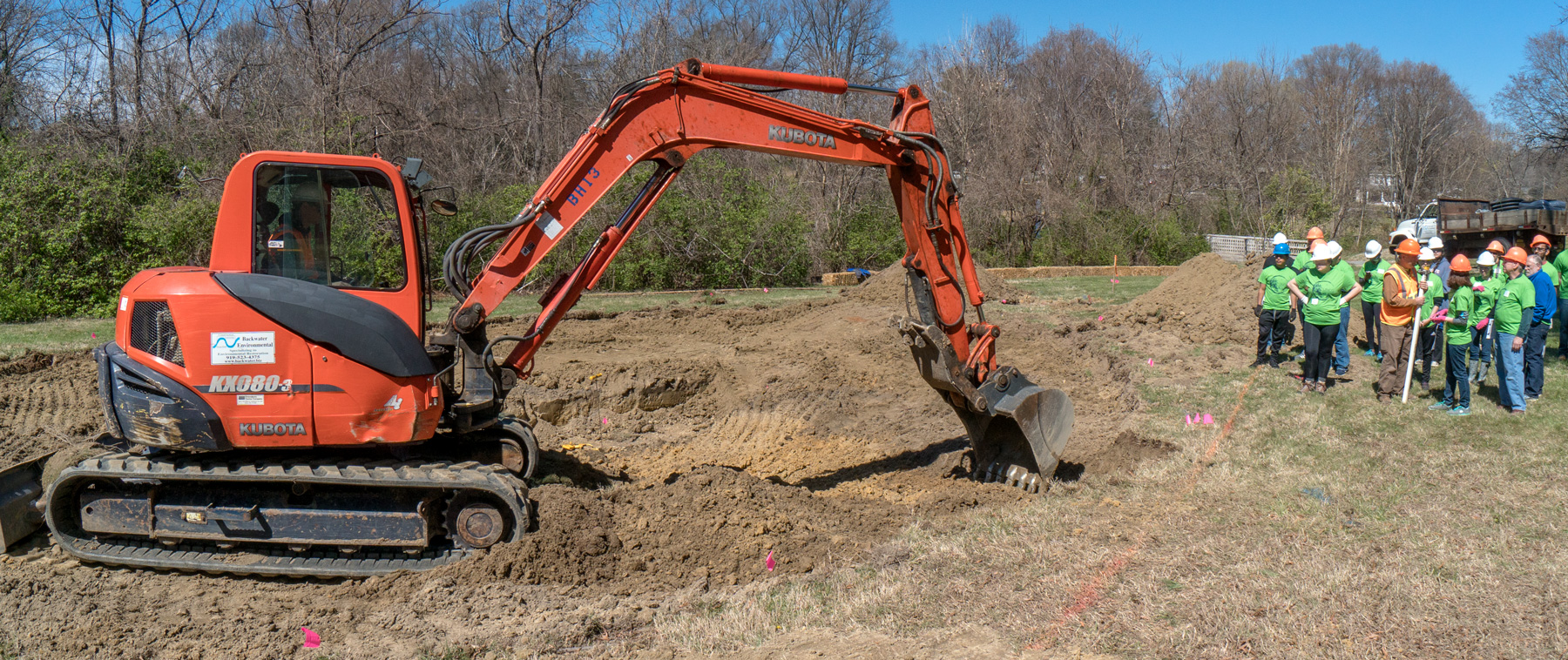
Excavator digging at the Peabody Park recreation wetland site.
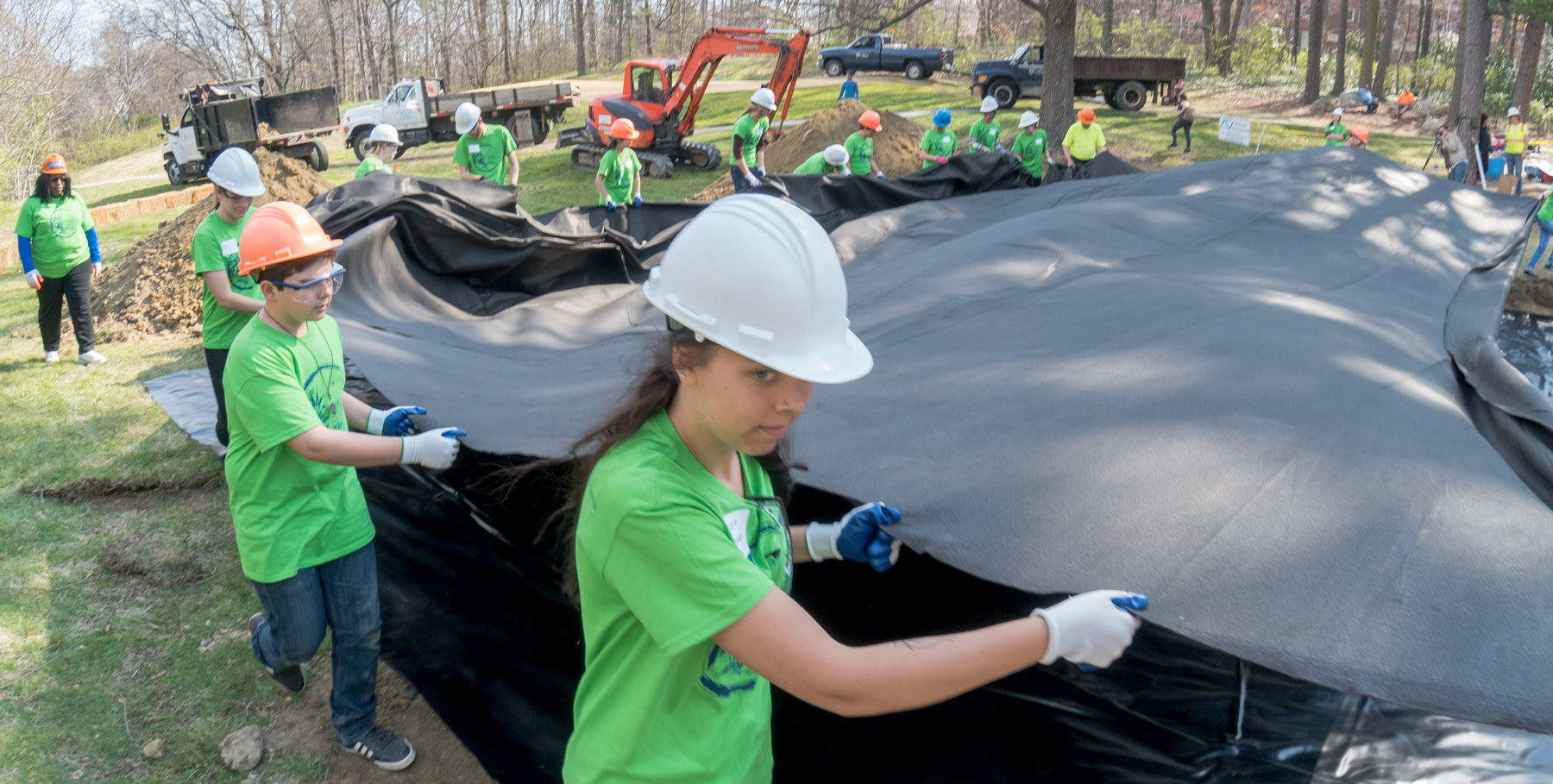
Students and faculty stretch the liner to be installed under the soil at the Peabody Park recreation wetland site.
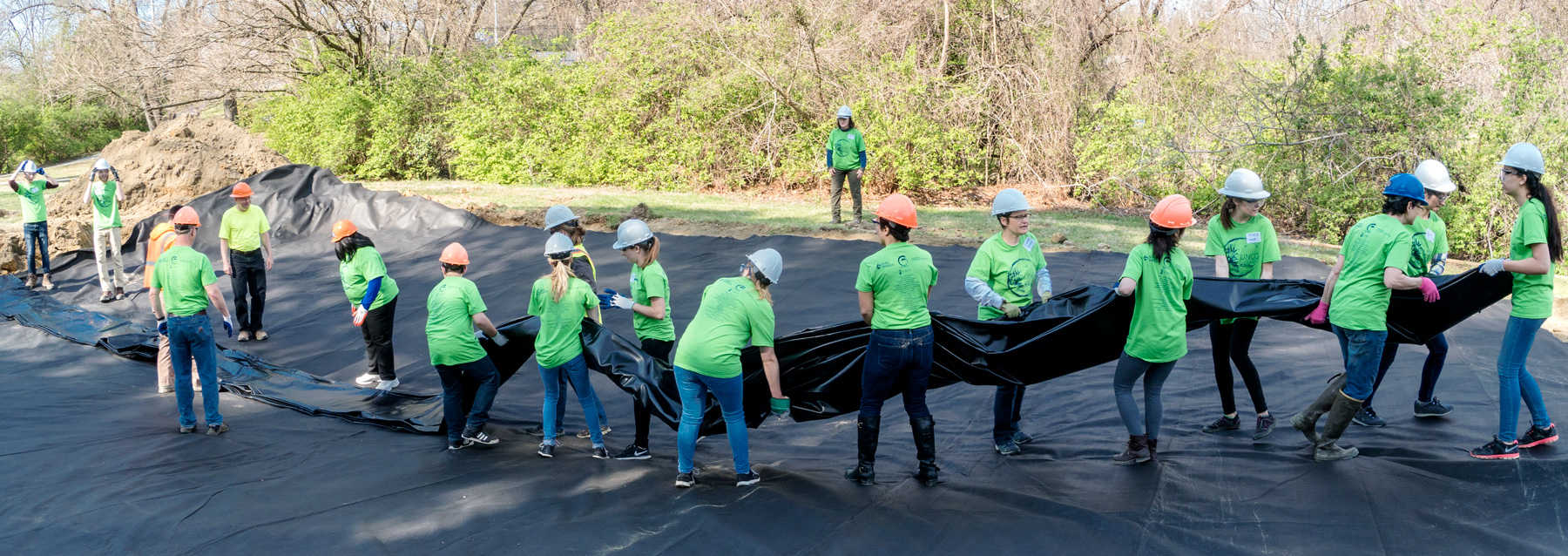
The liner is protected above and below with a thick layer of landscape fabric and then staked into place.

The finished site is seeded with annual wheat grass and covered in straw to prevent erosion while the wetlands matures.
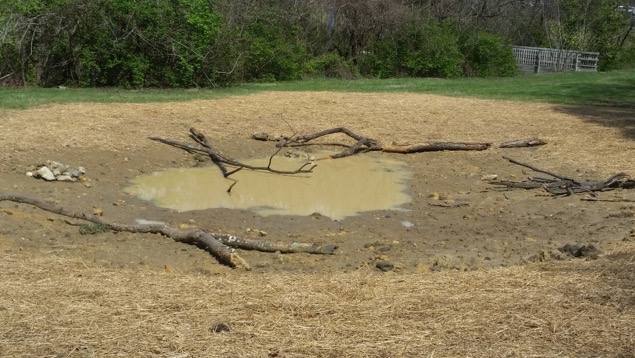
Recreation area wetland after first rain
Request a Visit for a Class or OrgANIZATION
This form is designed for groups that wish to access the wetlands for sampling, testing, field trips, research or other educational opportunities.
Please read our safety guidelines.
Safety Guidelines
Please pay attention to some simple safety issues when visiting or conducting research at the wetlands.
- use PPE that includes long pants and sleeves when walking through vegetation and eye glasses or safety glasses
- wear appropriate footwear in terrestrial environments around wetland, including sturdy boots with ankle support if walking and/or working on uneven terrain
- while hiking, carry bulky equipment in a sturdy backpack attached to shoulders and waist
- be aware of poisonous plants (this means being able to identify and teach others)
- be aware of snakes (this means being able to identify and teach others)
- be aware of biting/stinging insects (especially chiggers and wasp/hornet nests)
- if walking in or near water, wear appropriate footwear, including boots that prevent slipping in mud and waders.
- be aware of rising water, e.g,, from the release of dams
- never walk without free hands
- use a walking stick if unsure of balance
- watch out for “widow makers” in the forest (low handing big branches that can impale)
- if you are alone, someone should know where you are at all times (i.e., someone should know when you are heading out and when you return)
- always have a phone with service
- know the UNCG police number 336-334-4444